US annual inflation cooled more than expected to 3.5% in June from 4.2%, new consumer price index data from the Bureau of Labor Statistics showed. After the past few months of acceleration, economists expected the inflation rate to slow down to 3.8% in June.
Elizabeth Renter, senior economist at NerdWallet, told Business Insider before the release that the expected deceleration in headline inflation would largely be due to the dissipating effects of the oil price shock. Still, the new report is backward-looking, so it doesn't capture the recent uptick in gas prices after they fell in June.
The new inflation rate is the lowest since March 2026. In May, energy and gas prices had their largest year-over-year increases since summer 2022, as the Iran war caused higher volatility in oil markets. In June, that eased off as a fragile ceasefire largely held in the Persian Gulf, and energy prices rose 15.7% from a year ago, less than the previous 23.5% rise. Gas prices rose 26.7% from a year ago, less than the previous 40.5% rise.
Energy prices fell 5.7% over the month, and gas prices fell 9.7% over the month. The last time these prices fell was at the start of the year.
"June's dip in energy costs may not last," Atsi Sheth, the chief credit officer at Moody's Ratings, said in commentary. "Revived geopolitical tensions in the Strait of Hormuz could reverse that relief quickly."
CPI decreased 0.4% from May, more than the expected drop of 0.1% and the largest one-month decline since the early COVID-19 pandemic. Core CPI, which excludes volatile food and energy prices, was flat over the month, lower than the 0.2% expected increase. Meanwhile, it rose 2.6% over the year, less than the 2.8% expected increase.
June's inflation rate matched the 3.5% year-over-year increase in nominal wages BLS reported last week, breaking a streak of declining real wages.
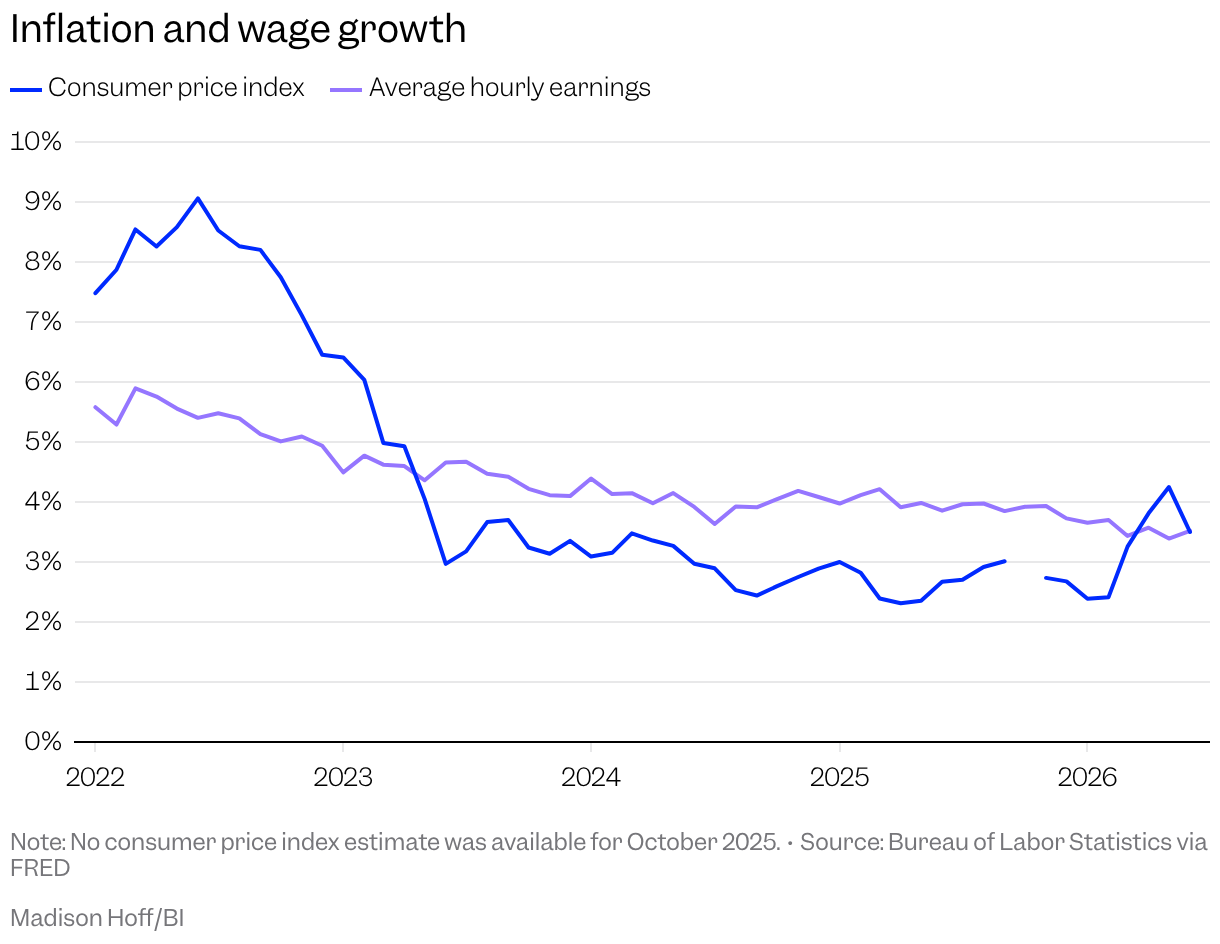
Nicole Bachaud, an economist at ZipRecruiter, told Business Insider that inflation outpacing wage growth affects both lower- and middle-income households, putting pressure on their budgets and on how they interact with the economy.
Stocks popped after the inflation report. The Dow was pressured by a 20% slide in IBM stock, but the S&P 500 and the Nasdaq both rose following the data release.

The Federal Open Market Committee can use this report and other data to determine its interest rate decision at the end of July. CME FedWatch, which estimates probabilities of different Fed moves based on market activity, showed an 83% chance of an interest rate hold after the new report, up from the roughly 60% chance before the release.
"The weaker inflation data likely keeps the Fed on hold for now and reduces any rate hike odds, but we remind investors that almost every communication that has emanated from Chair Warsh during his short tenure so far has been hawkish," Skyler Weinand, chief investment officer at Regan Capital, said.
Renter also said the new data would likely mean more time for the central bank to stay in its ongoing wait-and-see mode. She doesn't think the Fed will cut rates because price growth is still above its 2% target.
The Fed can also look at job market data released earlier this month, which showed unemployment cooling amid a drop in labor force participation and slower job growth than in recent months.
"Only 57,000 jobs added is quite low compared to where expectations were set, and a lot of this has to do with the big drop in employment in leisure and hospitality," Bachaud said.
