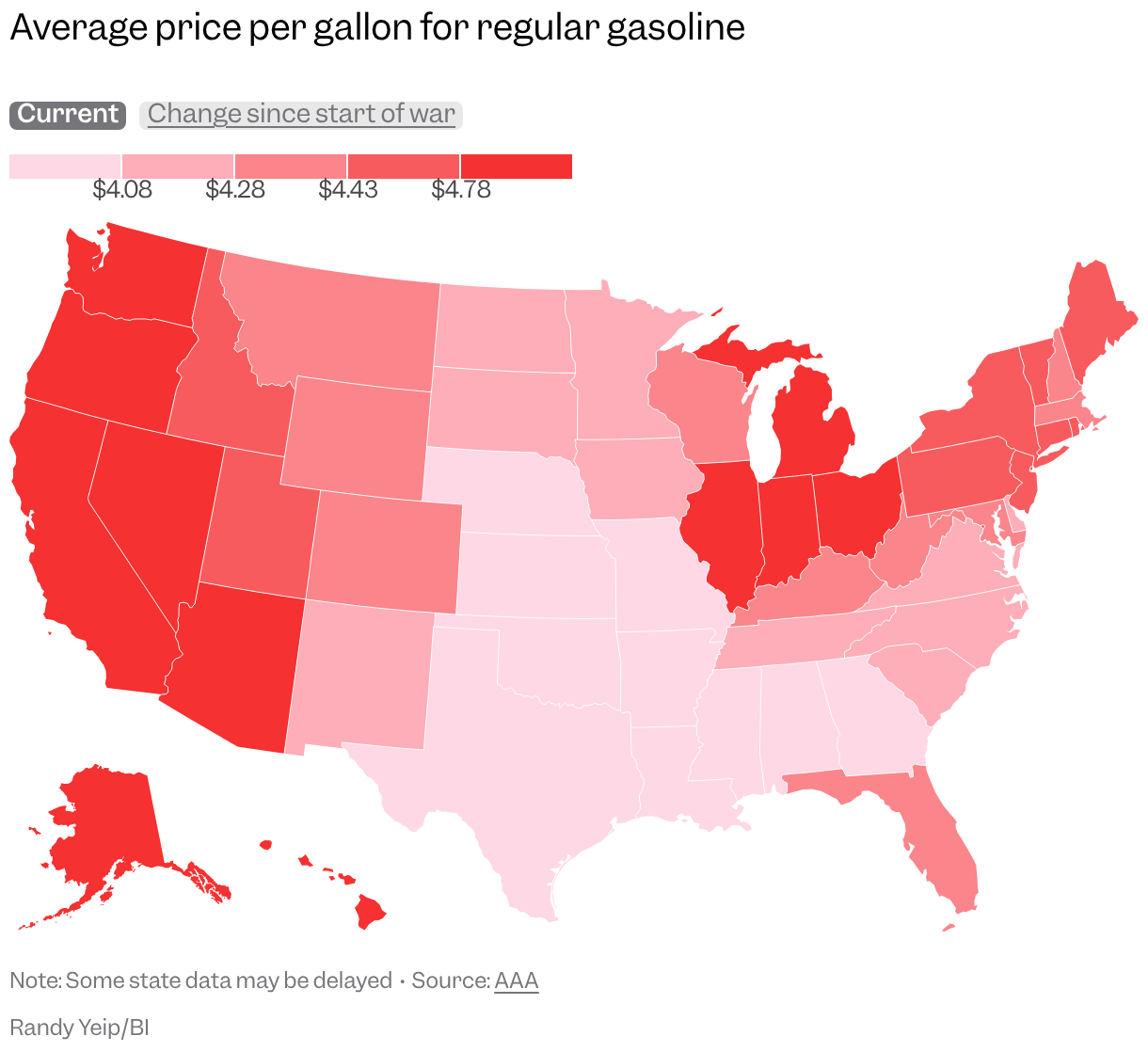
How do gas prices in your state stack up against the rest of the country? Business Insider created an interactive map so you can find out.
Gas prices have been on a roller coaster since late February, when the US and Israel began bombing Iran — and Tehran responded with attacks on Middle East oil refining plants.
The national average was $2.98 a gallon on February 27, according to AAA, and surged over $4 by March 31. By mid-May, average prices were over $4.50, before eventually cooling down to a national average of around $3.70.
Prices at the pump rose sharply over the past week as violent tensions flared again. The national average popped over $4 a gallon on Monday.
So far, West Coast and non-continental states have been hit the hardest by rising gas prices. California, Hawaii, Alaska, Washington, and Nevada have consistently posted the highest per-gallon averages.
Some central states like Oklahoma and Kansas have consistently posted the lowest averages during the recent spike.
The differences are stark — but prices have risen dramatically in every state.
Analysts say several factors are driving the increase. Blockades by the US and Iran in the Strait of Hormuz — a key global oil transit route that carries an estimated 20% of the world's oil — have raised global supply concerns. Ukraine has stepped up its attacks on Russian oil refineries, too, limiting the global output.
Finally, spring and summer typically bring a switch to a more expensive fuel blend, and recent American Midwest refinery outages have also tightened supply in the Great Lakes region.

Those pressures are pushing prices higher even as the US remains the world's largest oil producer, in part because oil is traded globally.
"The same oil we rely on can be moved anywhere in the world, and we're seeing exports at record levels," Patrick De Haan, a fuel market expert at GasBuddy, told Business Insider. "This is capitalism. When you put your house on the market, you're not like 'Yay, I'm going to take the cheapest bid.'"
