When it comes to the elite group of AI stocks known as the Magnificent 7, the winners are pretty well-established.
You have Alphabet, which has established itself as the latest and greatest contender, with the recent stock returns to back it up. There's also Nvidia, which has maintained its spot as king chipmaker.
But what about the worst performer?
Apple has struggled for a while with the perception that it's lagging on AI, and is spending its way into relevance through partnerships. Meta has come under pressure as the least diversified group member — it's basically AI or bust.
That perhaps makes the biggest laggard right now — Microsoft — a surprise. It has a well-diversified business and a thriving cloud-computing platform. It has its own AI agent in the form of Copilot.
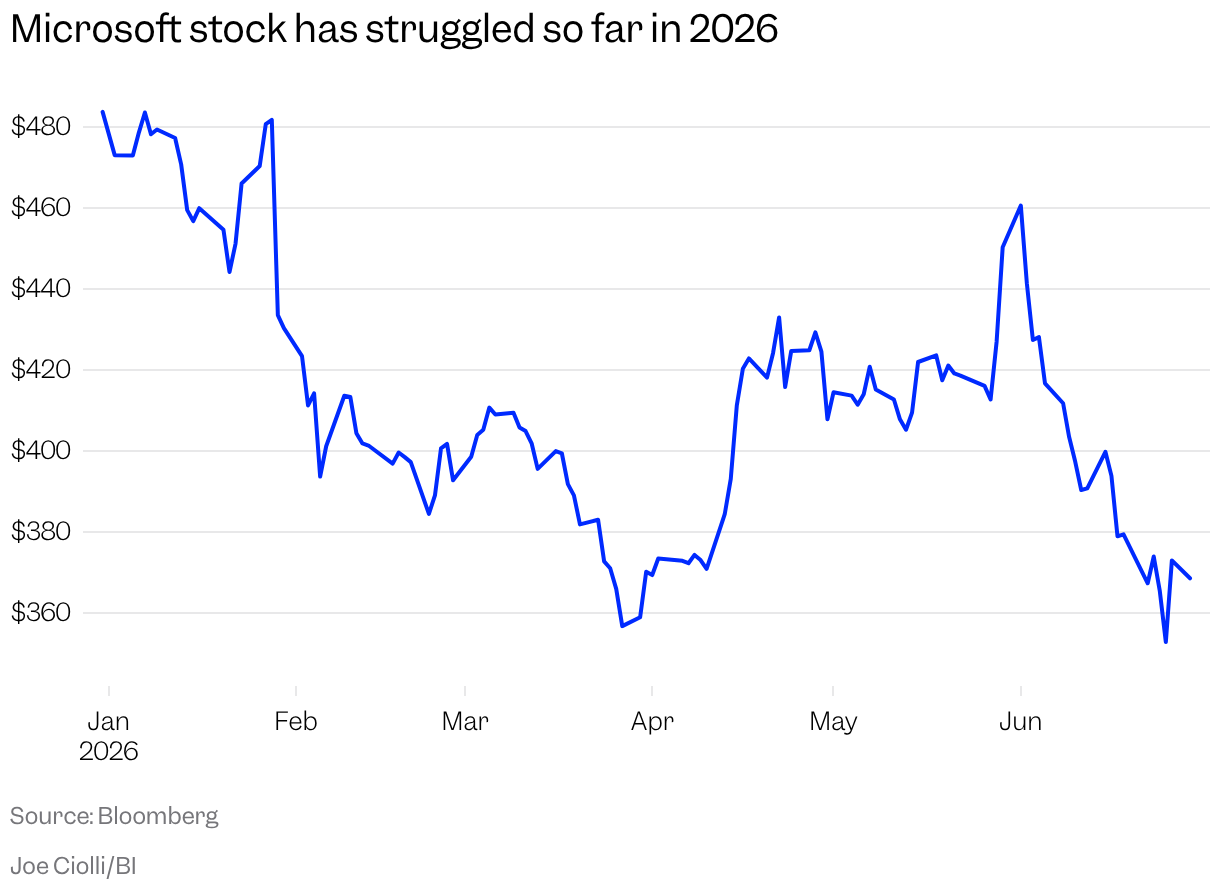
But check out these recent performance stats. Grim, to say the least:
- Microsoft stock is pacing for a 18% decline in June, which would be its worst month since the dot-com heyday of 2000
- Shares are down 24% year to date so far, the worst in the Mag 7
- Roughly $857 billion in market value has been erased over the same period
- The stock is now trading near its lowest level since 2023
With the company's position at the bottom of the Mag 7 confirmed, here are a few additional considerations:
Microsoft's unique double whammy
The company faces a set of circumstances that sets it apart from the rest of the Mag 7. It's currently contending with both: (1) investor pushback against heavy AI-capex spending and (2) jitters about how AI will disrupt software. After all, despite its newfound AI ambitions, Microsoft remains the world's biggest software company.

This has created a situation where progress on one front can be overruled by trouble on another. Diversification is suddenly not so appealing when you're feeling pressure across multiple businesses.
Valuations are at multi-year lows
Just last week, Microsoft's forward P/E ratio fell to roughly 21 times, its lowest level in about three years. Traders are grappling with whether this is an appropriate re-rating, or if now is the time to buy at a depressed valuation. Speaking of which…
Michael Burry is buying
The famed "Big Short" investor is one person who likes Microsoft valuations at current levels. He wrote in a Substack post last Thursday that he'd bought call options on the stock that will pay off if shares rise into the low $700s by 2028. Ever the market influencer, Burry's post helped spur a 6% rally last Friday.
Oracle is making sure Microsoft isn't alone
They say misery loves company. And in this case, fellow software titan Oracle has been feeling the same pain as Microsoft. In fact, their stock charts for 2026 look somewhat similar.
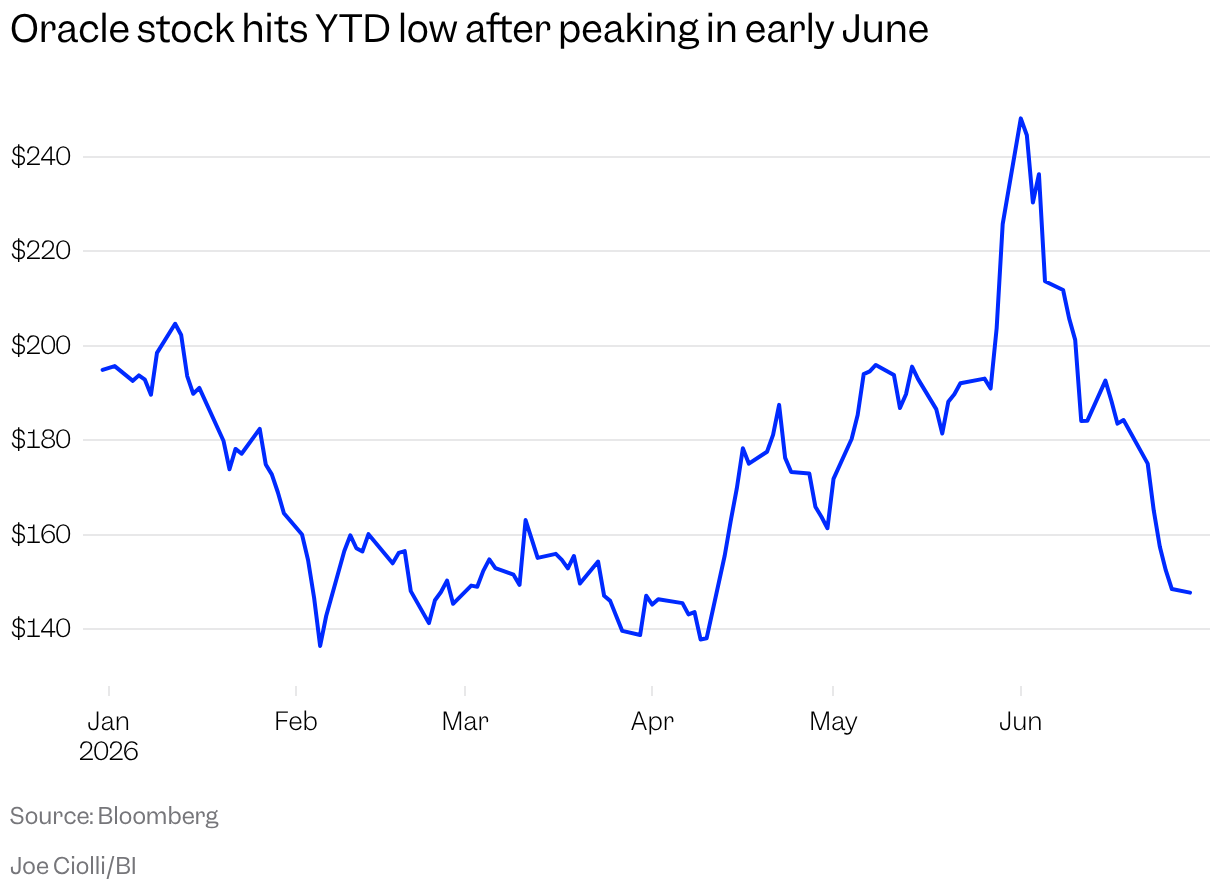
Also a major hyperscaler, Oracle is battling with the same dual issues as Microsoft. As the specter of software-industry disruption looms, Oracle is also feeling investor pushback against capex spending.
The key difference is that Oracle is funding largely with debt, which has placed immense attention on how its bonds are trading. The company's debt has become a bellwether for the fixed-income AI trade.
So Oracle joins Microsoft in a no man's land of sorts. Both companies have fully committed to the ultra-expensive endeavor of building out AI, but aren't being given the benefit of the doubt by investors — at least not at the moment.
