Backlash against AI has been building for a while. But apocalyptic warnings in recent days have kicked it into a new gear.
Warnings of bigger electric bills and job displacement suddenly feel like peanuts compared to the existential questions being asked. Who cares if your utility bill is higher if the world is barreling towards oblivion?
The initial headliner of this new wave of apocalyptic warnings was Jacob Coxon, the Anthropic researcher who just quit, claiming that Anthropic and OpenAI are "gambling with our lives."
The floodgates opened after Coxon's now-infamous X post. Paul Christiano, a new appointee to OpenAI's board and safety committee, poured fuel on the flames the next day, saying that "most people could die" if we "build superintelligence without more robust alignment" and "permanently lose control of it."
Pretty heavy stuff! But it became pretty par for the course as more high-profile warnings were issued through the end of the week.
Then, in a weekend essay, Anthropic CEO Dario Amodei wrote that he'd "become convinced" the breakneck pace of advancement must change, proposing a three-step safety plan. Altman said OpenAI would match Anthropic's commitment to give independent evaluators deep access, while Musk declared that "Dario is right."
It's all quite jarring, but there's a silver lining: All this sudden attention may make the worst-case outcome less likely.
The logic goes that if you know what outcome to guard against, you play better defense, consciously or not. Open discussion leads to broader awareness. AI risks are now being earnestly debated by researchers, executives, regulators, investors, and the public in real time. That should help avoid an extinction-level event where everyone is caught off-guard.
Market parallels
The aftermath of the 2008 Global Financial Crisis offers an apt comparison, and potentially an aspirational story.
The behavior of investors, financial institutions, and regulators changed after the market was caught fully exposed to a mortgage meltdown. Guarding against a repeat became a major priority. Never again would they underappreciate hidden risks to the point that they tipped into crisis.
Now that the previously unthinkable has been recognized as a real risk, getting caught flat-footed is less likely. A surprise downturn may still be possible, but it's no longer an outcome markets are blindly stumbling toward.
A shrug from investors
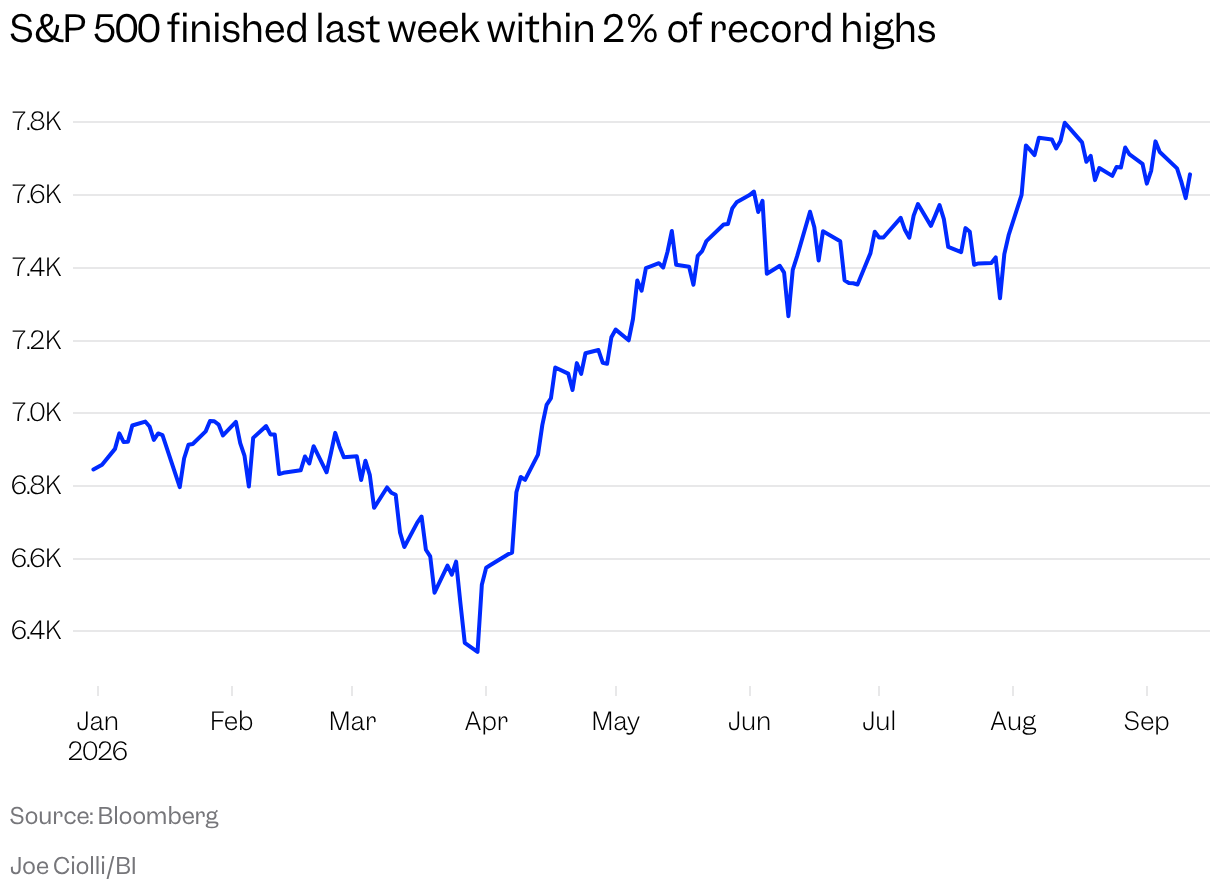
As the internet has been lit ablaze by AI apocalypse fears, markets have remained largely nonplussed.
Yes, the stock market was lower for the week. But that weakness was driven by more familiar causes: higher oil prices, inflation fears, and Treasury yields rising on the prospect of a rate hike this week. Stocks then rallied to close out the week.
If the world is going to end imminently, it's going to do so with the S&P 500 less than 2% from record highs.
Still work to be done
Of course, awareness alone is not a force field. The AI race could still overwhelm good intentions, and an alarming X post is no substitute for an actual safety plan.
That means tougher testing before the most powerful models are released, clear disclosure when they behave dangerously, limits on who can access them, and independent oversight with some real teeth.
It also means rival labs will need to find ways to share safety standards rather than treat caution as a competitive disadvantage.
But the bleakest scenario is one humanity fails to see until it is too late. At least this danger is firmly out in the open. Now the next step is to build the brakes before we need them.
Your guide to what's moving markets
