September 10, 2025 was one of the feel-good days of the year in markets.
At the center of the party was Oracle, the legacy tech company who stormed the gates of the AI trade with a blockbuster forecast for its cloud-infrastructure business.
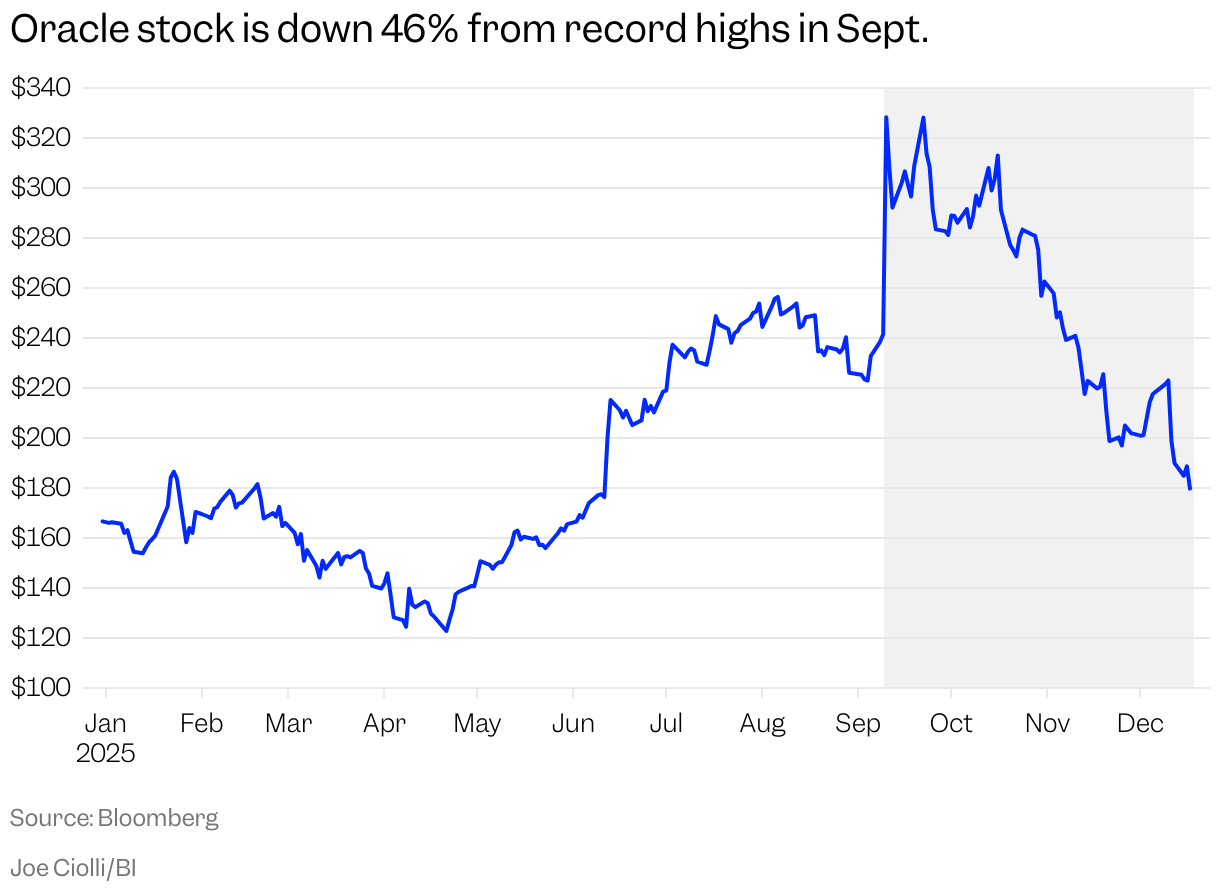
Investors were so fired up about Oracle's AI guidance that they sent shares soaring as much as 43% that day. The company was briefly more valuable than JPMorgan. Larry Ellison overtook Elon Musk as the world's richest person — for a couple of hours at least. The S&P 500 finished the day at a record high. The vibes were immaculate.
Now, in retrospect, the whole ordeal feels like the overreaction of the year.
Oracle's stock is down 46% since that blissful high, and now sits with a positive return of just 7% for the year, roughly half of the S&P 500.
In the process, the stock has become a poster child of a new market trend that's been percolating for weeks: Companies in the AI trade are priced to perfection, and anything seen falling short of lofty expectations will be punished.
Click here to sign up for First Trade, Business Insider's markets newsletter
Just ask Meta, Microsoft, or any of the other AI companies that got dinged this past earnings season for lagging forecasts.
Oracle has gotten hit particularly hard by two disappointing developments in quick succession. Last Thursday, the company notched an 11% loss after spending way more than analysts expected on AI data centers during the previous quarter. Then, this Wednesday, the company shed another 5% after a key investor backed out of a $10 billion data center deal.

The market reactions perfectly encapsulate the messages investors have been sending tech to companies in recent weeks: Stop spending so much, and start producing some results. The possible delay of a hotly anticipated data center doesn't fit that bill.
CoreWeave is another data-center-focused company that's felt the same wrath from investors. The former market darling — which spiked more than 400% in the weeks after its March IPO — is down more than 60% since then. The culprit? Data center delays.
All of the above has combined to dent the invincibility of the AI trade. Gone are the days of indiscriminate gains for anyone doing anything AI-related. Investors are being more discerning, and holding companies to a higher standard of progress.
The AI bubble may not be fully popping yet, but there's definite deflation happening in the areas of the market struggling to keep up with expectations.
Your guide to what's moving markets
